


An atmosphere of nervous excitement. Visible is the chilled vapour exhaled by my competitors as they perform the "about to run" wiggle on the start line.
A quick twitch of the hips.
I'm at my local weekly parkrun event and I'm focused. It's almost time...
Oh, hang on. I need to sort my device. As does the person beside me.
The person in the line expresses impatience. I refuse to go until… done! Connection established, and I'm running.
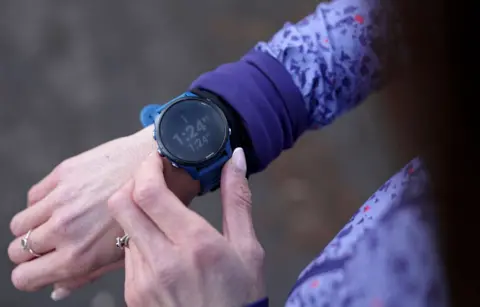
In the mele, it's hard to find a arm without a wearable on it. And it's not just us runners who wear them.
We're witnessing a explosive, multi-billion dollar sector. Companies like Garmin are prevalent, all offering an wide array of various models to fit a range of needs. According to how feature-packed the model you go for, price tags can start from an affordable sum to a small fortune.
"It drives me insane, I can't relax."
"It comforts me… It's like a friend guiding me."
"Stop telling me I've experienced a bad night's sleep."
A handful of the comments people have shared from like-minded device users when I ask what they think of theirs.
The Data Dilemma
My feelings on mine? Right now, irritating. It's telling me I'm not hitting my target, causing me to question whether the trees I'm running below are disrupting my GPS connection.
Countless individuals of us fasten these compact gadgets onto our wrists and use them 24/7, apparently unconcerned with the fact they're constantly monitoring us.
Gone are the days when we relied on them only to give us an estimation of our step count. Today, they can track our sleep quality, heart rate, glucose levels, our recovery score.
It's difficult to find a physical metric they don't track.
But can they do what they advertise? And are the numbers we scrutinise a faithful picture of the truth? Do they boost our mental and physical wellbeing, or do the avalanche of measurements and motivational messages just contribute to our sense of overwhelm?

Addiction or Aid?
"I find myself getting a a little fixated with mine," a wearer admits.
While she values how her device tracks her workouts, she finds some of its other functions "overwhelming" at times - a feeling initially realised during a pregnancy.
Prior to discovering she could adjust the settings, her smartwatch kept telling her she was not being energetic enough. Now, the watch frequently reports her she's had a poor sleep score.
"I have a young baby, I don't need to be told I'm tired," she says. "I know that perfectly well."
Couldn't she just take it off?
"I could, perhaps, but I'm in this push-pull dynamic with it," she explains. "I appreciate it for its exercise data, I sometimes question whether all the other things it can now do is maybe overkill for me."
Inside the Device
Each model of smartwatch has its own proprietary way of measuring your health metrics and interpreting your data, but the vast bulk use detectors on the underside of the watch.
They typically project minute LED lights onto your skin which can observe capillary action, identifying your pulse rate. Higher-end devices analyse changes in the skin conductance that passes over the skin to gauge your recovery state.
A Fine Balance
A data scientist says that in general for smartwatches, it's a "fine balance" - while the ever-evolving tech could potentially aid early diagnosis, "spotting abnormalities before we feel unwell", it could also turn us watch wearers into the "worried well".
He points out that newer wearables can perform tests like heart rhythm analysis, which constantly monitor how stable the heart is. They can alert if someone is experiencing a heart arrhythmia, where there is erratic signals in the heart causing an irregular heartbeat.
This does not automatically signal someone is about to have a cardiac event, but it can give an advance notice they might be more vulnerable of a heart problem in the future.
But how to make sense of these figures is not straightforward. The expert worries that as additional features are added, people may struggle to fully contextualise their data.
"I have some doubts that having the capacity to monitor so much data is such a beneficial thing," he says.
A health researcher specialising in cardiology echoes this sentiment. Research into the effect of wearable tech on a set of cardiovascular patients suggested a significant portion of those who were given devices to monitor their heart health experienced greater stress and were "far more likely to use medical services".
She noted a pattern with her patients - they saw a alarming metric on their watch. They became worried. Their BPM rose. They got even more concerned. They checked again, and their heart rate increased again.
"Upon viewing numbers about ourselves that we can't properly interpret then, understandably, we are going to become concerned," the psychologist says. "We check, we check again - it becomes a feedback loop."


